Rule 28. Right of Way
Blue Book 2026, Part 1, Rule 28 · Precedence and Personal Fouls
In plain English
Whoever is on the line with possession may carry on down it.
- A player in possession may carry on down the line and hit the ball on their offside, until somebody makes a legitimate play on them.
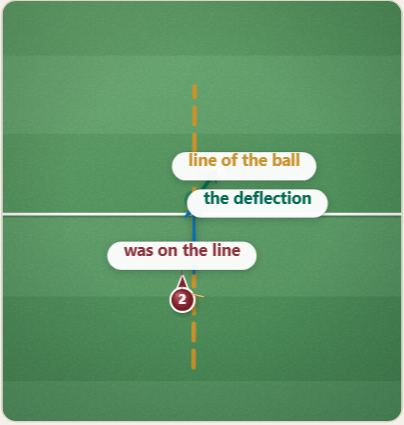
- Unexpected deflection: players on the line with possession keep the right to play the ball if they can still reach it without changing direction, and otherwise may carry on a short way down the original line. What they may not do is play it once someone else is established on the new line.
- Changing the line: swing the ball suddenly towards, into or under an opponent and that opponent must clear the new line and has no play - but you have to let them get out, and riding into them to win a foul for yourself is your foul. With the ball on your offside you may move it at any angle to your left, which leaves a trailing opponent a nearside play only.
- Hitting past a player: knock the ball past an opponent riding the same line at the same speed and they may play it on their offside, provided they do not cross you. You may not ride into them from behind.
- Delay of play: a player in possession who is marked must keep the ball moving. Stop or drop to a walk and you get one tap, after which somebody on your team has five seconds to hit it away or run with it. Marked means an opponent within two ponies' lengths while you are neither blocked nor ridden off.
- Turning: the first player to the ball may not turn in front of a player on the line. If that player checks, they may turn either way as long as they keep their speed up and carry on with the play. On the boards, once turned, they must hold their chosen direction.
The clause that governs
A player with possession is entitled to continue down the LOB to hit the ball on their offside unless they are subjected to a legitimate play.
Quoted extract · Blue Book 2026, Part 1, Rule 28
14 questions on this rule
Rule 28a: When players are riding on the Line of the Ball (LOB) with possession and the ball is unexpectedly deflected for a short distance, do those players retain the right to play the ball?
- Yes, if they can do so without changing direction and no other player is established on the new LOB ✓
- No, they immediately lose the right to play the ball
- Yes, but only if they were the last to hit the ball
- No, unless they can reach the ball within three strides
(i) If a player suddenly changes the LOB towards, into or under an opposing player, that player must clear the new LOB and may not make a play; but the player in possession must allow the opposing player to do so.
If a player suddenly changes the Line of the Ball (LOB) and an opposing player is on the new LOB, what must the player in possession do?
- He can ride into the opposing player to take control of the ball
- He must challenge the opposing player for control of the ball on the new LOB
- He can force the opposing player to change direction
- He must allow the opposing player sufficient time to clear the new LOB ✓
(i) If a player suddenly changes the LOB towards, into or under an opposing player, that player must clear the new LOB and may not make a play; but the player in possession must allow the opposing player to do so.
A player in possession has the ball on his offside and may move the ball at any angle to his left. What options does a trailing opponent have?
- The trailing opponent can make an offside play
- The trailing opponent can make a nearside play ✓
- The trailing opponent has no play options
- The trailing opponent can intercept the ball
(i) If a player suddenly changes the LOB towards, into or under an opposing player, that player must clear the new LOB and may not make a play; but the player in possession must allow the opposing player to do so.
What would be considered a foul if a player in possession suddenly changes the Line of the Ball (LOB) towards an opposing player?
- If the player in possession allows the opposing player to clear the new LOB
- If the player in possession rides into the opposing player with intention of claiming a foul ✓
- If the player in possession avoids contact with the opposing player
- If the player in possession challenges the opposing player for the ball on the new LOB
(i) If a player suddenly changes the LOB towards, into or under an opposing player, that player must clear the new LOB and may not make a play; but the player in possession must allow the opposing player to do so.
What are the rights of an opposing player who is riding on the same line and at the same speed when the player in possession hits the ball past him?
- The opposing player can play the ball on his offside but must not cross the player following, and the player following must not ride into him from behind ✓
- The opposing player has no right to play the ball and must move out of the way of the player following
- The opposing player can play the ball on his nearside and must avoid contact with the player following
- The opposing player can cross the line of the ball without any restrictions
A player in possession of the ball when marked by an opposing player must keep moving the ball.
A player with possession is entitled to continue down the LOB to hit the ball on his offside unless:
- He is subjected to a legitimate play ✓
- He is within two ponies' lengths of an opponent
- He has already scored a goal
- His pony is tired
(i) If a player suddenly changes the LOB towards, into or under an opposing player, that player must clear the new LOB and may not make a play; but the player in possession must allow the opposing player to do so.
If a player in possession of the ball reduces to a walk or walking speed, what happens?
- Foul
- Player loses precedence
- Player can only backhand on the next tap
- Player is allowed to tap the ball once at this speed ✓
A player in possession of the ball when marked by an opposing player must keep moving the ball.
What must a player in possession of the ball do if marked by an opposing player and reduces to a walk or walking speed?
- Keep moving the ball and either hit the ball away or run with it within 5 seconds ✓
- Pass the ball to a teammate
- Stop and wait for the umpire’s instruction
- Dismount the pony and hand the ball to the umpire
A player in possession of the ball when marked by an opposing player must keep moving the ball.
When is a player considered to be marked in a polo match?
- When an opposing player is within two ponies’ lengths, and the player in possession is being blocked or ridden off
- When an opposing player is within two ponies’ lengths, and the player in possession is not being blocked or ridden off, and has the freedom to continue down the Line of the Ball (LOB) ✓
- When an opposing player is within one pony’s length, regardless of the actions of the player in possession
- When an opposing player is more than two ponies’ lengths away but is moving towards the player in possession
A player in possession of the ball when marked by an opposing player must keep moving the ball.
Under what conditions can the first player to the ball on the boards turn the ball if a player following is also on the LOB?
- If the player following speeds up
- If the player following checks or reduces speed, and the first player maintains speed and continues the play ✓
- If the player following checks or reduces speed, and the first player stops to wait
- Only when the first player has stopped completely
(i) If a player suddenly changes the LOB towards, into or under an opposing player, that player must clear the new LOB and may not make a play; but the player in possession must allow the opposing player to do so.
When a play is on the boards and the first player to the ball has turned, what must this player do?
- The player must slow down
- The player must stop and turn back in the opposite direction
- The player must keep going in the chosen direction ✓
- The player must pass the ball to a teammate
(i) If a player suddenly changes the LOB towards, into or under an opposing player, that player must clear the new LOB and may not make a play; but the player in possession must allow the opposing player to do so.
What must happen for a player to retain the right to play the ball if it is unexpectedly deflected for a short distance while he is on the Line of the Ball (LOB)?
- The player must be able to continue without changing direction ✓
- The player must shout "Mine!" loudly
- The player must be closer to the goal than any other player
- The player must have previously scored in the match
(i) If a player suddenly changes the LOB towards, into or under an opposing player, that player must clear the new LOB and may not make a play; but the player in possession must allow the opposing player to do so.
If a player suddenly changes the Line of the Ball towards, into, or under an opposing player, what must the opposing player do?
- He must make a U-turn and give possession to the opposing team
- He may continue to play regardless of the opposing player's position
- He must pass the ball to a teammate
- He must clear the new LOB and may not make a play ✓
(i) If a player suddenly changes the LOB towards, into or under an opposing player, that player must clear the new LOB and may not make a play; but the player in possession must allow the opposing player to do so.
If a player in possession hits the ball past an opposing player riding on the same line and at the same speed, what does the opposing player have the right to do?
- Stop the play and request a referee's decision
- Take possession of the ball and change direction
- Play the ball on his offside provided he does not cross the player following ✓
- Request a penalty shot
(i) If a player suddenly changes the LOB towards, into or under an opposing player, that player must clear the new LOB and may not make a play; but the player in possession must allow the opposing player to do so.
Test yourself
Practise right of way and the rest of the HPA rules, offline, on your phone.
Every rule here is stated in our own words, with short quoted extracts from the HPA Blue Book 2026 and Green Book 2025 and a link to the book itself. Polo Rules Test is an independent study aid and is not affiliated with the Hurlingham Polo Association. In any dispute the published rulebook governs.