Rule 36. Foul, No Foul and Advantage Rule
Blue Book 2026, Part 1, Rule 36 · Penalties
In plain English
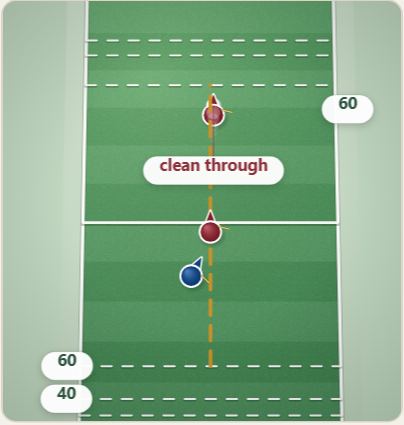
Whistle for a foul. If the umpires decide there was none, throw-in.
- The umpires stop play for a foul with the whistle.
- If on consultation they agree there was no foul, or the referee rules 'No Foul', the restart is a throw-in towards the nearest boards or side line from where the ball was when the alleged foul happened - unless a no foul advantage fair play dropped ball is given instead.
- The advantage rule: the umpires may hold the whistle, or not blow at all, if blowing would disadvantage the side that was fouled. So play to the whistle, not to what you think happened.
The clause that governs
The umpires may elect not to blow the whistle or delay doing so if doing so would result in a disadvantage to the team fouled.
Quoted extract · Blue Book 2026, Part 1, Rule 36
5 questions on this rule
What should the umpires do if they believe a foul has occurred in a match?
- Stop the play by blowing the whistle ✓
- Give a red card to the player who committed the foul
- Award a free hit to the opposing team without stopping the play
- Ask the referee for permission to stop the play
The umpires should stop play for a foul by blowing the whistle.
In what scenario might umpires in a match choose not to blow the whistle immediately after a foul occurs?
- When the team that committed the foul is at a disadvantage
- When the team that was fouled has a clear advantage, and blowing the whistle would disrupt their opportunity ✓
- When they are not sure whether a foul has occurred or not
- When a spectator distracts them
The umpires should stop play for a foul by blowing the whistle.
Why might umpires delay blowing the whistle after a foul has been committed?
- To allow the fouling team time to regroup
- To avoid a disadvantage to the team that was fouled ✓
- To make the match more thrilling for the audience
- Because they have lost the whistle
The umpires should stop play for a foul by blowing the whistle.
Why might the umpires choose not to blow the whistle immediately for a foul?
- To let the players settle
- Because blowing it would put the team that was fouled at a disadvantage ✓
- Because the referee has not yet been consulted
- Because the ball is outside the 60 yard line
The umpires should stop play for a foul by blowing the whistle.
The referee rules "No Foul". How is play restarted?
- A throw-in towards the nearest boards from where the ball was ✓
- A Penalty 5a from the spot of the alleged foul
- A throw-in on the centre line
- A fair play dropped ball at the 30 yard line
The umpires should stop play for a foul by blowing the whistle.
Test yourself
Practise foul, no foul and advantage rule and the rest of the HPA rules, offline, on your phone.
Every rule here is stated in our own words, with short quoted extracts from the HPA Blue Book 2026 and Green Book 2025 and a link to the book itself. Polo Rules Test is an independent study aid and is not affiliated with the Hurlingham Polo Association. In any dispute the published rulebook governs.